Explore this complete guide to machine embroidery threads, including thread types, materials, colors, and tips for choosing the right thread for every embroidery project.
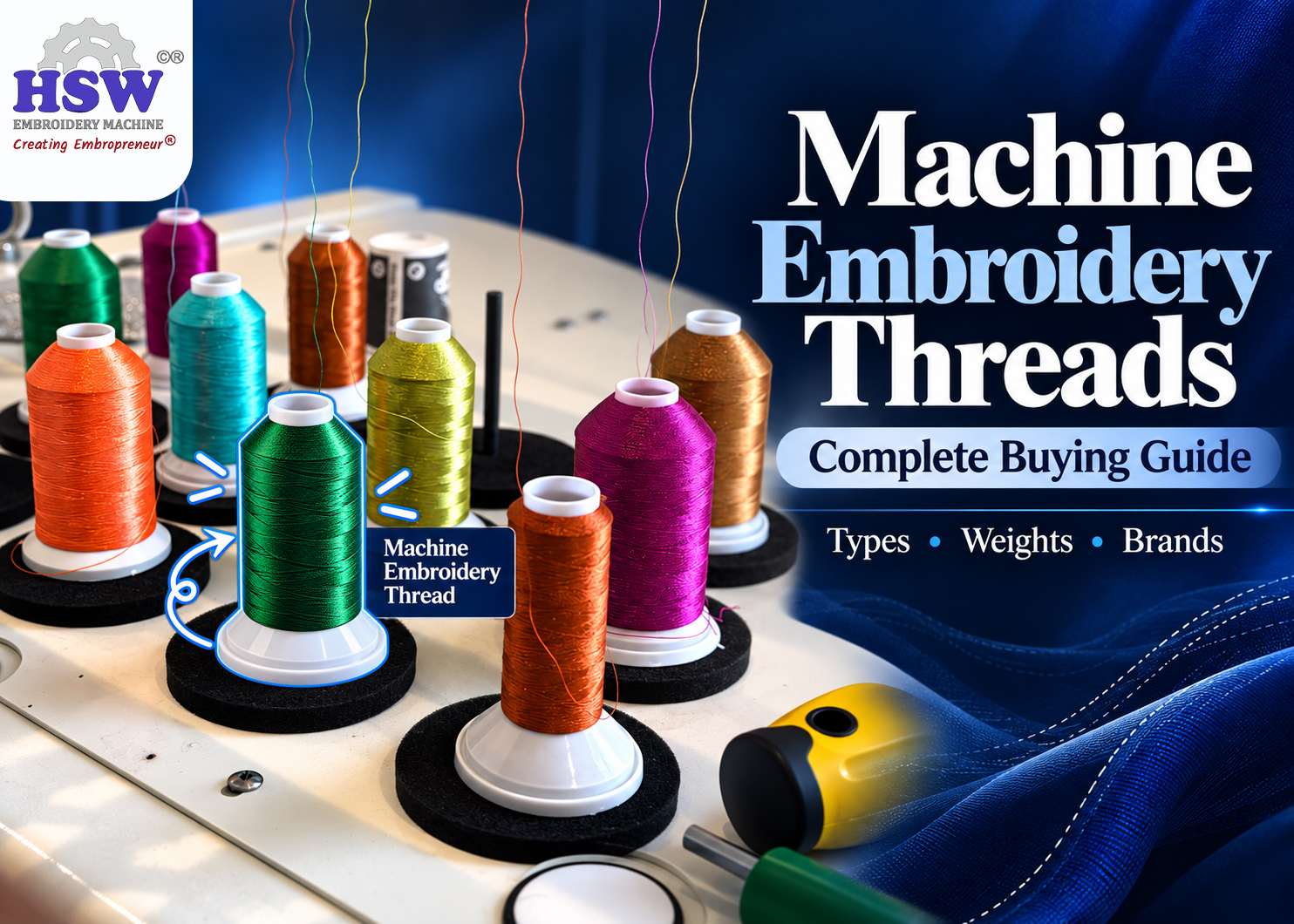
Thread can look like a small part of a computerized single head embroidery machine setup, but it can make a noticeable difference to the finished design. You might use the same machine, fabric, and embroidery file, yet get different results simply by changing the thread.
Some threads give the design a brighter finish. Others hold up better to frequent washing. And if the thread keeps breaking during production, even a straightforward order can take much longer than expected.
If you're selecting machine embroidery threads for the first time, consider the type, thickness, and the project you are completing. Here is a guide for beginners to select the right thread for an embroidery business.
Why Use Special Thread for Machine Embroidery?
There are many sewing threads on the market, but not all threads are suitable for machine embroidery.
Machine embroidery thread comes in different materials, and each works a little differently. Your choice will depend on the fabric you're stitching and the finish you want.
Polyester is a common starting point for everyday commercial work like uniforms and caps. Rayon is another popular choice when the appearance of the embroidery matters more than heavy-duty use, and is used for decorative work.
Types of Machine Embroidery Threads
-
Polyester embroidery thread
Polyester is a sensible place to start for running an embroidery business that needs one thread type for regular production.
Polyester thread for embroidery is known for its strength and good resistance to colour fading. It is widely used on uniforms, workwear, caps, children's clothing and garments that are washed regularly.
It also comes in a wide range of colours, making it practical for businesses that handle different customer designs. For most everyday jobs, 40-weight polyester is a useful option to keep in stock.
-
Rayon machine embroidery thread
Rayon is popular for its smooth finish and attractive shine. It can give lettering, decorative patterns, and fashion embroidery a slightly different look from polyester.
Rayon machine embroidery thread is often chosen for decorative garments and designs where the finish is a priority. It can work well for sarees, blouses, and other fashion pieces
Rayon is generally less resistant to harsh washing and bleaching than polyester. If the garment will be used heavily or washed frequently, check whether rayon is suitable for that job.
-
Cotton and metallic threads
Cotton embroidery thread gives a more natural, less glossy appearance. It can suit certain decorative designs, but you should check that the thread is appropriate for your machine and the design you're stitching.
Metallic thread is used when a design needs a silver, gold, or other reflective finish. It can be more demanding to run through a machine, so needle choice, machine speed, and thread tension may need adjustment.
You don't need to stock every type at the beginning. Start with the threads your customers' orders actually require.
What Does Thread Weight Mean?
Thread weight refers to its thickness. The thread weight numbering may seem reversed initially; a higher weight number typically indicates a finer thread.
40-weight thread is a common choice for most standard machine embroidery. Many designs are digitized with this thickness in mind because most embroidery machines use 40-weight thread.
60-weight thread can help capture finer details for very small lettering.
If you switch to a thicker thread, check the design, as it may need changes to stitch properly.
Don't change thread thickness without considering the embroidery file. A design made for one thread size may not stitch properly if you substitute a significantly different thickness without adjusting the settings.
Don't Forget the Bobbin Thread
The thread you see on top is only half the story. Underneath the fabric, the bobbin thread helps form each stitch with the upper thread.
The bobbin sits underneath the fabric and supplies the lower thread while the machine stitches. Most embroidery machines use a finer thread in the bobbin than on top. Check your machine's recommendation before buying bobbin thread.
Many embroidery jobs use white or black bobbin thread, but the right choice depends on the fabric, design and machine instructions. If the underside of the embroidery will be visible, matching the thread colour may be useful.
Check your machine manual for the recommended bobbin thread and weight. Avoid assuming that any thread that fits the bobbin will perform equally well.
How to Choose the Right Thread for Your Work
Before ordering a large quantity, think about what you embroider most often.
Polyester is usually a practical choice for uniforms, caps, and garments that go through regular washing. Rayon may be worth trying for decorative work where a soft, glossy finish matters.
Colour consistency is important too. If a customer orders the same logo several times, using the same thread range makes it easier to match the earlier work. Keep a record of the brand, colour number and thread type for repeat orders.
Price also needs to be considered, but the cheapest spool isn't necessarily the most economical option. If a thread breaks repeatedly, wastes production time or produces inconsistent results, the saving may not be worth it.
When trying a new thread, stitch a sample using the same fabric and design you'll use for the order. Check for thread breaks, coverage, colour, and how the embroidery looks after washing if the garment will be laundered.
Which Are the Best Machine Embroidery Thread Brands?
There isn't one brand that works best for every machine and every job. Availability, colour range, consistency and your budget all matter.
Brands such as Madeira, Isacord, Sulky and Robison-Anton are known in the machine embroidery market. Their ranges vary, so compare the specific thread type rather than choosing on brand name alone.
When buying in India, check specialist embroidery supply stores, authorised dealers and established online sellers. Ask whether the thread is intended for machine embroidery, check the spool size and confirm that the colour number matches your requirements.
If you're buying from a new brand, order a few colours first and test them on your machine. Once you find a range that runs well and gives you consistent results, it becomes easier to build your thread collection.
Final Thoughts
Polyester is commonly used for uniforms, caps and everyday embroidery because it handles regular washing well. Rayon's shinier finish makes it a popular choice for decorative work on blouses and other garments.
Focus on thread quality, the right weight, and consistent colour supply. These details can make everyday production easier, particularly when you're handling repeat orders.
You don't need dozens of machine embroidery thread types to get started. A reliable range of commonly used colours, the right bobbin thread, and a few test stitches will take you a long way.
About the Author

Mr. Tapan Kapadia is the Founder and Director of HSW, a pioneer in accessible single-head commercial embroidery machines. With over three decades of textile industry experience, he has empowered tens of thousands of home entrepreneurs and small businesses across India.

