Explore different types of embroidery machine stabilizers and learn how to choose the right stabilizer for various fabrics, designs and embroidery projects.
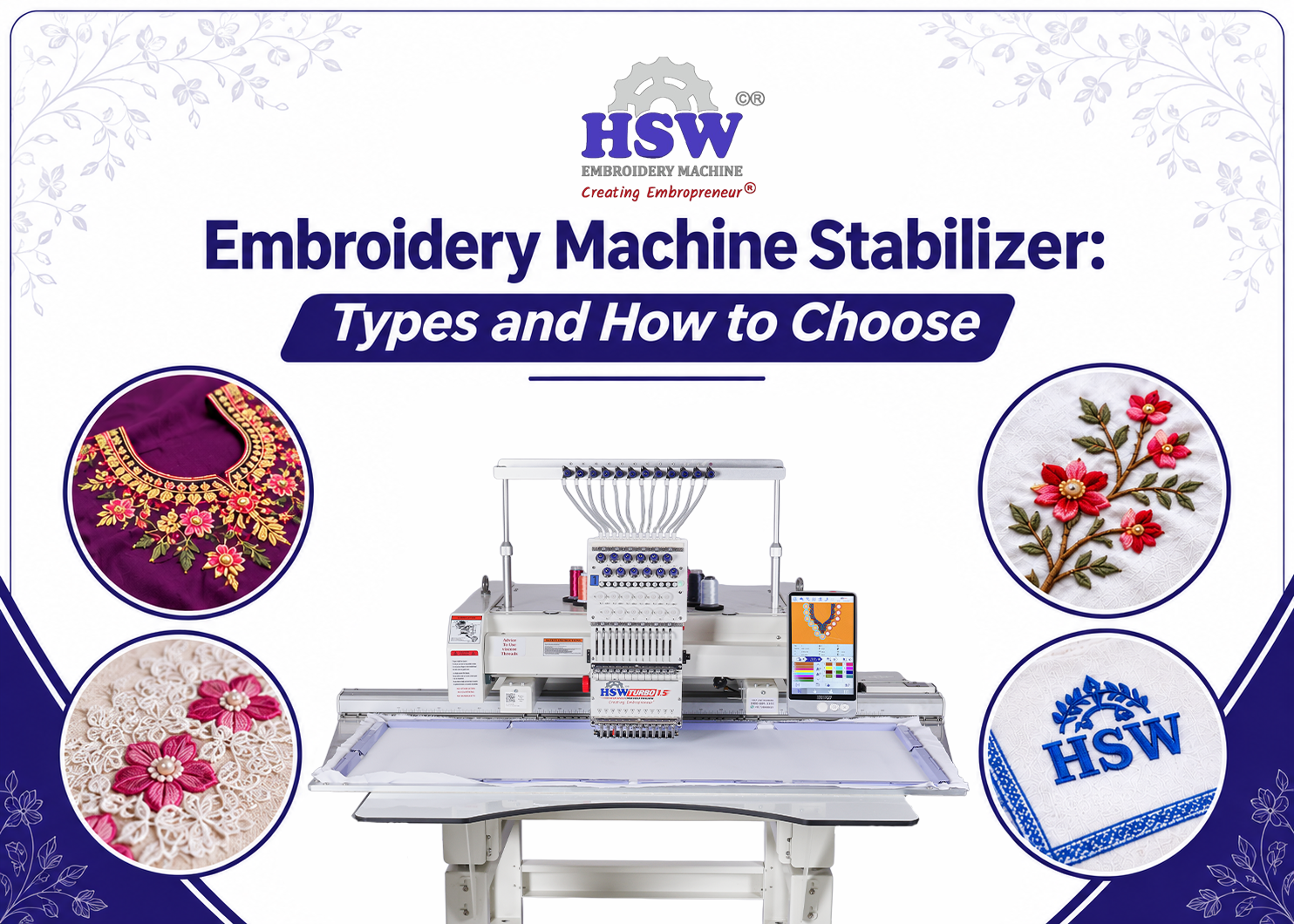
Machine embroidery involves hundreds or thousands of stitches on a piece of fabric. The fabric can move or stretch during stitching, especially when it is thin or has a loose weave. A stabilizer supports the fabric and keeps it steady while the design is embroidered.
Stabilizers come in different types. But the type you use depends on the fabric and the embroidery design. Let's explore the different types of stabilizers for embroidery and how to pick the best stabilizer for machine embroidery projects based on your fabric.
What Is an Embroidery Machine Stabilizer?
A single-head embroidery machine stabilizer is a sheet of material used along with the fabric during machine embroidery. It gives the fabric support while the needle moves through it.
The stabilizer is typically placed on the back of the fabric, though some types may be applied to the front. Depending on the material, it is torn away, trimmed, washed out, or heat-removed after stitching.
For example, a cotton shirt works well with tear-away backing, a stretchable T-shirt needs cut-away backing, and towels need a water-soluble topping to stop the stitches from disappearing into the fabric.
Why Is Stabilizer Used in Machine Embroidery?
The needle and thread put constant pressure on the fabric while the machine is stitching. This is more noticeable on thin cotton, stretchable materials, and loosely woven fabrics. If the fabric shifts or stretches, the embroidery may not come out as intended.
For example, you may notice:
-
Puckering: Wrinkles form around the embroidered area.
-
Uneven lettering: Letters may look stretched or lose their shape.
-
Stitches sinking into the fabric: This often happens when embroidering on towels, fleece, and other textured materials.
-
Fabric stretching: A T-shirt may look fine inside the hoop but appear distorted once it is removed.
The stabilizer provides extra support during stitching and helps prevent these issues.
Types of Stabilizers for Machine Embroidery
Tear-Away Stabilizer
Use: Tear-away stabilizer is commonly used on cotton, denim, and other fabrics that don't stretch much. It's typically used for small logos, names, and simple designs.
Where to place: Tear-away stabilizer is placed behind the fabric.
Removal Method: It is removed by gently tearing it after embroidery. When removing it, tear away the excess slowly rather than pulling it all at once. This is especially important around small letters and fine details.
Tear-away comes in different weights. A lightweight version may be enough for a small design, but dense stitching needs stronger support.
Cut-Away Stabilizer
Use: It is commonly used for T-shirts, knitwear, and other stretch fabrics. These materials can move under the needle, and the backing helps the embroidery retain its shape after the garment is taken out of the hoop. Cut-away is also useful for larger designs with dense stitching.
Where to place: Cut-away stabilizer remains behind the embroidery.
Removal Method: The extra material is trimmed after stitching, leaving a small amount around the design. It may leave some backing visible on the reverse side, but removing it completely would take away the support the design needs.
Water-Soluble Stabilizer
Use: Water-soluble stabilizer is used when the backing needs to be removed completely with water. It is available in different forms, mainly as a topping or backing.
-
Water-soluble topping:
A water-soluble topping is placed over the fabric. It is particularly useful on towels, fleece and velvet, where the surface fibres can cover the stitches. The topping keeps the stitches sitting above the fabric while embroidery is in progress.
-
Water-soluble backing:
Water-soluble backing is used for work such as freestanding lace, where the design needs support during stitching but should not have fabric or backing behind it in the finished piece.
These two products are not interchangeable. A thin topping may not be strong enough to support a freestanding design, so check the product's intended use.
Heat-Away Stabilizer
Use: Heat-Away Stabilizer is used for certain decorative embroidery jobs where washing or tearing away the backing is not suitable.
Removal Method: Heat-away stabilizer is removed using heat, and the removal method depends on the product.
It is available in different forms. Heat-away is used when the fabric can tolerate the required temperature. It is not a suitable option for every garment.
How to Choose the Right Stabilizer
There is no single best stabilizer for machine embroidery. The choice depends on the fabric, design, and the finish.
Here are a few common examples of stabilizer use:
|
Embroidery work |
Stabilizer to consider |
|
Small logo on cotton |
Tear-away |
|
Embroidery on T-shirts |
Cut-away |
|
Large design on stretch fabric |
Cut-away |
|
Design on towels or fleece |
Water-soluble topping |
|
Freestanding lace |
Water-soluble backing |
|
Embroidery on denim |
Tear-away or cut-away, depending on stitch density |
The weight of the stabilizer also matters. A small name does not need the same support as a large filled design. A stronger backing is needed if the embroidery has many stitches packed into a small area.
Hooping is another part of the process. The fabric should sit flat in the hoop without being stretched too tightly. This is particularly important with T-shirts and other stretch materials. If the fabric is stretched while hooping, it can pull back after the hoop is removed.
If you are unsure about a combination, run a sample on the same type of fabric before starting the actual garment. Check the front for puckering and the back for loose or distorted stitches. It is much easier to adjust the stabilizer at this stage than after completing a customer's order.
About the Author

Mr. Tapan Kapadia is the Founder and Director of HSW, a pioneer in accessible single-head commercial embroidery machines. With over three decades of textile industry experience, he has empowered tens of thousands of home entrepreneurs and small businesses across India.