
Discover bead embroidery machine features, types and applications. Learn how these machines work, their uses in garment decoration and how to choose the right machine for your embroidery business.
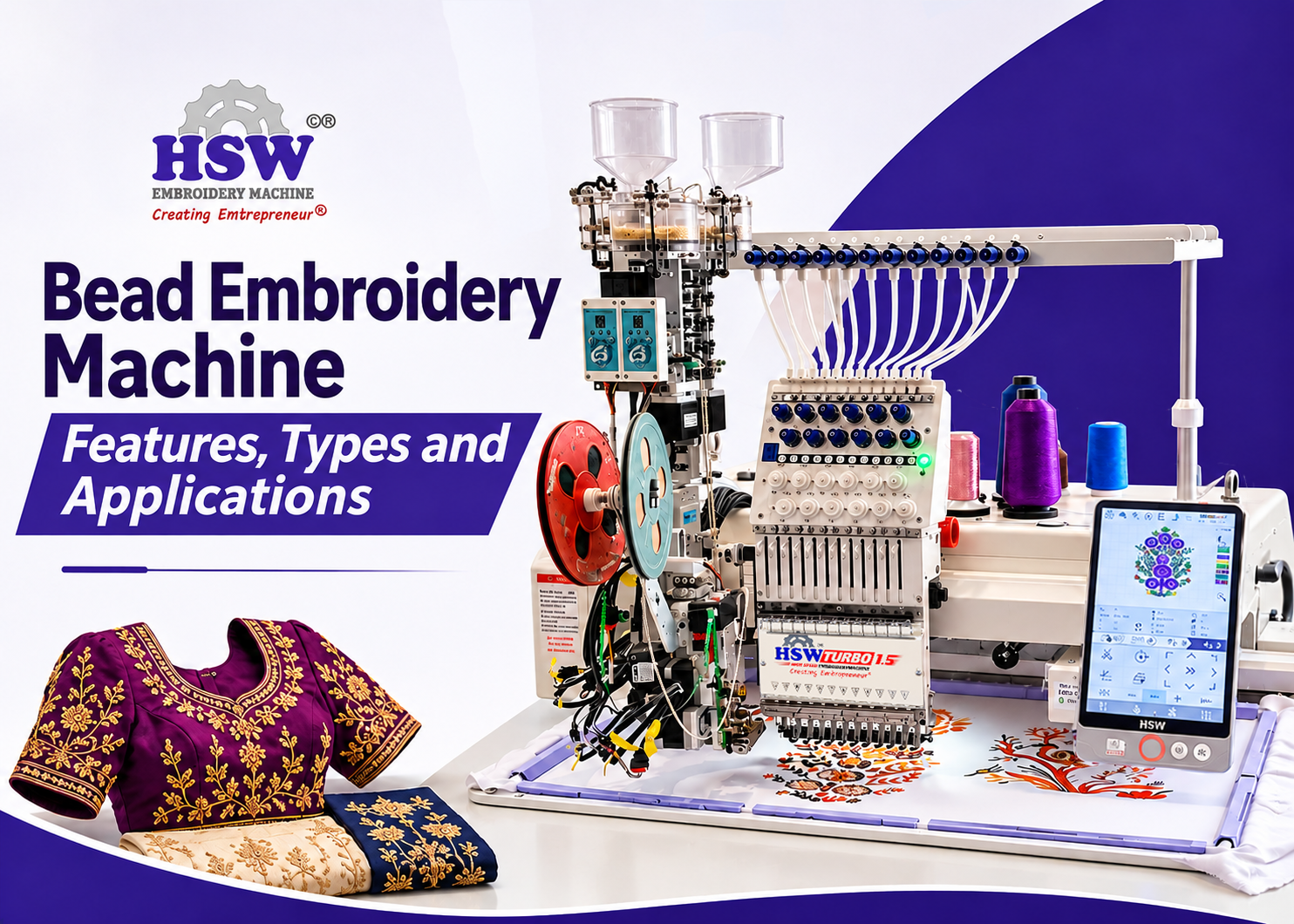
Beadwork is commonly seen on bridal blouses, lehengas, sarees, and designer garments. Small beads add texture and detailed designs around necklines, sleeves, borders, and floral patterns.
Traditionally, artisans do it by hand, which allows for detailed designs, but completing large orders can take considerable time. A bead embroidery machine helps bring some of this work into machine-based production. It uses a specialised attachment to place beads on fabric as part of an embroidery design.
If you are exploring a bead embroidery machine for your garment business, here is what you should know about the attachments, how it works, and the kind of work it can handle.
What Is a Bead Embroidery Machine?
A bead embroidery machine is an embroidery machine fitted with a beading attachment(also called a bead device). The attachment feeds beads into position so they can be secured to the fabric according to the programmed design.
It is not a completely separate machine in every setup. The bead device is an optional attachment fitted to a compatible computerized embroidery machine. This combines a regular thread embroidery machine with a beadwork device.
The type of beads, their attachments, and the design all affect the final result. Not every bead is compatible with every attachment, so check compatibility before production.
How Does Bead Machine Embroidery Work?
The process starts with a digitized design prepared for machine embroidery. The design needs to account for bead placement, how they will be secured, and how the machine will move through the pattern.
Once the fabric is hooped and the bead attachment is fitted, the machine follows the programmed sequence. The beading device feeds the beads into position, and the embroidery machine secures them to the fabric.
The method of working depends on the attachment used and the digitized design. A design created for regular thread embroidery cannot be directly used for beading. Bead placement must be considered in the design phase itself.
A test run is useful before starting the actual garment. It helps confirm the beads feed, sit correctly on the fabric, and produce the intended finish.
Types of Bead Embroidery Attachments
Beading attachments are available in different configurations. Single, double, and triple bead setups generally refer to how many bead lines or positions an attachment can handle. The actual arrangement and working method depend on the machine and attachment manufacturer.
-
Single Bead Attachment
A single bead attachment places one beadline at a time. used for outlines, borders, small motifs, and detailing around embroidered patterns.
It is useful when the design needs controlled bead placement rather than several rows of beads together.

-
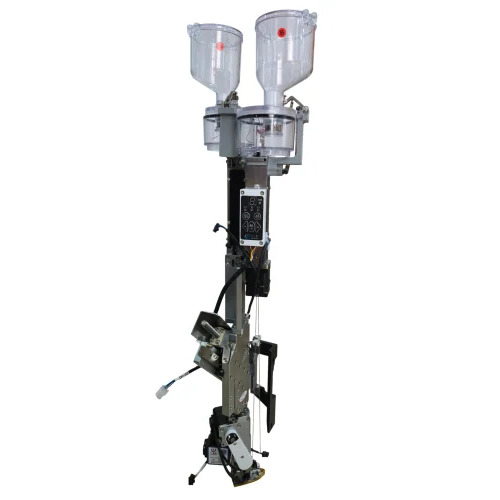
Double Bead Attachment
A double bead attachment is designed to work with two bead lines or positions, depending on its construction. It can help create wider bead patterns and decorative arrangements without treating every line as a separate operation.
This works well for borders, repeated patterns, and designs that use more than one line of beadwork.
-
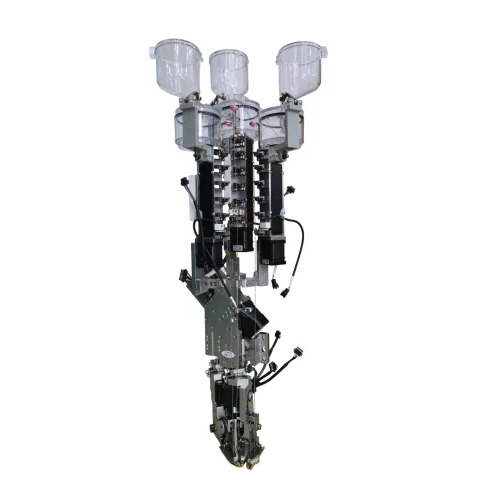
Triple Bead Attachment
A triple bead setup is designed for arrangements involving three bead lines or positions. It may suit wider decorative patterns, but the exact capabilities depend on the attachment.
Before choosing one, ask the supplier to demonstrate the attachment on the type and size of beads you intend to use. The number of bead positions alone does not tell you how well it will handle your designs.
What to Check Before Choosing a Beading Attachment
Not every beading attachment works with every embroidery machine or bead type. Check these things before buying:
-
Bead size and shape: Check which beads the attachment can feed. Totally different sizes or shapes may not work with the same setup.
-
Machine model: Confirm that the beading attachment is compatible with your embroidery machine and how many attachments can be used together.
-
Design file: Bead placement has to be included in the embroidery design file. Check whether your supplier can help prepare or convert beadwork designs.
-
Fabric: Net, silk, and other lightweight fabrics may need extra care. Try the design on a similar fabric before using it on a finished garment.
-
Service and spare parts: Ask the supplier who will install and service the attachment, and whether replacement parts are available.
Where Is Bead Machine Embroidery Used?
In India, bead embroidery is mostly seen in garments made for weddings, festivals, and special occasions. It is often combined with thread embroidery to add more detail to a design.
-
Bridal blouses: Beadwork is used around necklines, sleeves, back patterns, and floral designs.
-
Sarees and lehengas: It can be added to borders, pallu designs, and decorative motifs.
-
Designer wear: Beads are used on Dresses, kurtis, and occasion wear alongside regular embroidery.
-
Fashion accessories: Bead embroidery is also used on fabric bags, purses, and other accessories.
The fabric and bead type determine what kind of design you can make. A design that works well on a blouse fabric may not give the same result on soft net or a lightweight material.
Choosing a Bead Embroidery Machine for Your Business
Start with the kind of orders you expect to receive. If most of your work involves blouse necklines and small motifs, your requirements may differ from a business taking up large lehenga panels or saree borders.
Check the attachment's compatibility, the bead sizes it can handle, and the design preparation involved. Also check how easily the machine can switch between regular embroidery and beadwork, especially if you plan to offer both services.
Most importantly, see the machine working before you buy it. Take a sample of the fabric and beads you intend to use, and ask for a demonstration of a similar design. This will give you a much clearer idea of the finish and production process than a specification sheet alone.
Bead Embroidery Attachments in HSW Machines
At HSW, we offer optional beading attachments for our computerized single-head embroidery machines, including both a single beading device and a twin beading device.
You can use these attachments to add intricate decorative beadwork to blouses, sarees, and lehengas. Currently, our HSW Ultra & Turbo 1.5 models support bead embroidery setups.
Because these attachments are optional add-ons, they come at an additional cost. If you are planning to add beadwork to your production, reach out to our team to book a live demo and confirm compatibility with your preferred machine model.
About the Author

Mr. Tapan Kapadia is the Founder and Director of HSW, a pioneer in accessible single-head commercial embroidery machines. With over three decades of textile industry experience, he has empowered tens of thousands of home entrepreneurs and small businesses across India.